
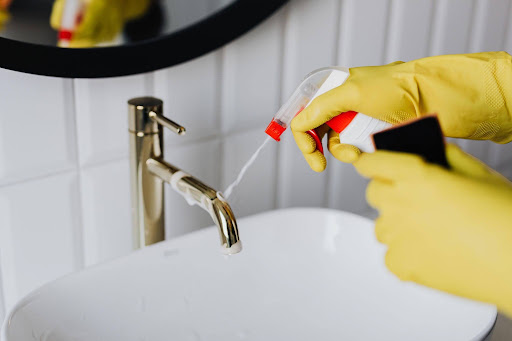
Regular maintenance cleaning removes soil that is sitting on a surface. Deep cleaning removes soil that has bonded to it. That is the real difference, and it is why one cannot substitute for the other. Most Spokane homes need a deep clean two to four times a year and maintenance cleaning every one to four weeks in between.
The question underneath the question is usually about money: two quotes came back at very different numbers and it is not obvious what the higher one buys. It buys time and chemistry applied to a different category of dirt. A one-time deep house cleaning is not a better version of your weekly visit. It is a different job, and once you can see where the line falls, the choice usually makes itself.
The Short Answer: Which One You Need Right Now
- Your home has not been professionally cleaned in the last three months — start with a deep clean, then maintain from there.
- You have a cleaner coming regularly and things still look dull—you need a deep clean. More frequent maintenance will not fix it.
- You are keeping up and just want the time back—a recurring housekeeping service is the right call, on a weekly-to-monthly rhythm.
- You are moving, listing, hosting, or coming out of a remodel—you need a one-time clean, but possibly not a deep clean. See the last section before you book.
The Line That Divides Them: Soil That Sits vs. Soil That Bonds
Almost every article on this topic hands you two task lists and leaves you to guess why the tasks are grouped that way. Here is the reason.
Some soil simply rests on a surface. Dust on a shelf, crumbs on a counter, hair on a floor, and a fresh spill. It has no chemical attachment to what it is sitting on, so a cloth, a vacuum, and a general-purpose cleaner lift it off. That is maintenance work, and it is fast because nothing is holding the soil in place.
Other soil bonds. Calcium and magnesium from your water dry onto glass and chrome as mineral scale. Cooking oil that gets heated repeatedly polymerizes into a hard varnish on cabinet faces and range hoods. Soap combines with skin oils and hard-water minerals and works into grout. Sugars and proteins dry into a film inside refrigerator seals and oven interiors. None of that wipes off, because it is not sitting there — it is stuck there.
Removing bonded soil takes three things a maintenance visit does not have: different chemistry, dwell time so the chemistry can work, and mechanical agitation. That is the whole of it. Every item on a deep house cleaning service checklist—grout, appliance interiors, baseboards, window tracks, vent covers, behind and underneath—is on that list because the soil there has crossed the line.
Once soil bonds, cleaning more often does not help. You can vacuum a bathroom every day for a year and the shower glass will keep clouding, because scale is not affected by frequency. This is the single most useful thing to understand about the two services, and it is why “just book more visits” is not a solution to a home that has quietly gotten worse.
What Each One Actually Covers
Regular maintenance cleaning
Dusting reachable surfaces, wiping counters and fixtures, cleaning sinks, toilets, tubs and showers, vacuuming and mopping floors, emptying bins, and tidying and changing linens. It holds a home at whatever standard it is currently at. On a weekly or bi-weekly rhythm it keeps sitting soil from ever getting the chance to bond, which is the quiet reason it is worth more than it looks.
Deep cleaning
Everything above, plus the bonded work: scrubbing grout and descaling tile, glass and fixtures; degreasing range hoods, cabinet faces and backsplashes; cleaning inside the oven and refrigerator; hand-washing baseboards and door frames; detailing window sills and tracks; wiping vent covers and ceiling fans; and cleaning behind and beneath furniture and appliances. It takes considerably longer, because most of the added time is spent waiting for products to work and then scrubbing.
How Often You Need Each
These are ranges rather than rules, and they reflect what the industry broadly converges on. Your home may sit outside them:
- One or two adults, no pets—maintenance every two to four weeks, deep clean twice a year.
- A couple or small family—maintenance every two weeks, deep clean two to three times a year.
- A family with young children—maintenance weekly, deep clean three to four times a year.
- Dogs or cats in the house—maintenance weekly, deep clean four or more times a year.
- Someone with allergies or asthma at home—maintenance weekly, deep clean quarterly.
What actually sets your number is how fast your home produces bonded soil: how hard your water is, how much you cook, how many people and animals move through, and how much outdoor particulate gets in. If you would rather work from a written rhythm, our house cleaning schedule and checklist lay out what belongs on a weekly, monthly, and seasonal cadence.
Why Spokane Homes Cross the Line Faster
National advice on this topic is written for no one in particular. Two things about living here change the math.
Hard water. Liberty Lake Sewer and Water District reports its water at 104 ppm of calcium carbonate — moderately hard — and attributes it to minerals dissolved out of the glacial deposits that make up the Spokane Valley–Rathdrum Prairie Aquifer. Mineral content varies across the area and Spokane’s city utility does not publish a hardness figure, so treat this as an indicator rather than a number for your address. But the effect is the same everywhere the aquifer supplies: every shower, every dishwasher cycle, and every wiped-down faucet leaves a little scale behind. Scale is bonded soil by definition. Homes here need descaling on a shorter interval than an article written for a soft-water region will tell you.
Smoke season. The Spokane Regional Clean Air Agency reports that across the summers of 2020 through 2025, the region averaged roughly six days a year of unhealthy air quality caused by wildfire smoke, and its guidance during those events is to keep windows and doors closed and run air conditioning on recirculate rather than fresh-air intake. That is the right advice for your lungs, and it has a side effect indoors: for days at a time the house is sealed, the same air is being cycled, and fine particulate settles into upholstery, rugs, bedding, curtains, and filters instead of being flushed out. Which is why September is a sensible month for a deep clean in this region and why how professional cleaning improves indoor air quality is a more practical question here than in most of the country. Between deep cleans, our list of ways to reduce dust in your home covers what helps day to day.
Neither is cause for alarm. Both are reasons to sit at the shorter end of whatever range fits your household.
The Step Nobody Explains: The Walkthrough Sets the Scope
Deep cleaning is billed for time because the work takes time. That has a consequence almost nobody spells out: what determines whether you get the clean you were picturing is not the quote; it is the walkthrough.
If the oven, the inside of the refrigerator, the window tracks, and the garage door into the house all matter to you, say so before anyone starts, and expect them to change the hours. If you have one room that has been bothering you for two years, point at it — a good crew will spend the time there rather than distributing it evenly across a house where it is not needed. Ask which items are inside the scope and which are add-ons, and ask what happens if the work runs long.
Homeowners disappointed by a deep clean are rarely disappointed by the cleaning. Their mental checklist and the crew’s written one were different documents. Five minutes at the start prevents it.
When a Deep Clean Is the Wrong Purchase
There are three common situations where people book a deep clean and should have booked something else. We would rather say so now than after you have paid for it.
- You are vacating a rental. You need a move-out cleaning, which is scoped against an empty unit and a landlord’s inspection checklist. It is a different list of tasks and a different standard of done.
- You have just finished construction or a remodel. Book post-renovation and remodel cleaning. Construction dust is fine enough to keep resettling for days, so it takes staged passes. A single deep clean will look finished on the day and disappointing by the weekend.
- The problem is inside something. Carpet that smells, ducts, or anything involving water damage or mold needs the relevant specialist and their equipment. A housecleaning crew, ours included, cleans surfaces—it does not extract what has soaked in.
And one more: if your home is genuinely being maintained and you are only unhappy with one shower and one oven, you may not need a whole-house deep clean at all. Ask for those two items instead.
Frequently Asked Questions
Is a deep clean worth it if I already have a cleaner?
Usually yes, and often that is exactly when it is worth most. Maintenance cleaning holds your home at its current standard but does not reach bonded soil, so a home can be consistently tidy and still be slowly accumulating scale and grease. A deep clean resets the baseline your regular visits are maintaining.
How long does a deep clean take compared to a regular cleaning?
Substantially longer — a multiple of a maintenance visit, not a small addition. It depends on the size of the home, how long since the last deep clean, and which items you include. Ask for an estimate of hours at the walkthrough.
Do I need a deep clean before starting recurring service?
If the home has not been professionally cleaned in roughly the last three months, yes. Starting recurring service on top of accumulated bonded soil means paying for maintenance visits that cannot reach the thing bothering you. Deep clean first, then maintain.
How often should you deep clean your house?
Two to four times a year for most households, and quarterly or more if you have pets, young children, or allergies at home. In this region, count a post-smoke-season clean in early autumn as one of them.
Do you offer deep cleaning and recurring service in Spokane?
Yes. We provide one-time deep cleaning in Spokane and recurring house cleaning in Spokane, and we serve Spokane, Spokane Valley, Liberty Lake, and Post Falls. Weekend and after-hour cleanings are available.
Start With the Right One and the Rest Gets Easy
Deep cleaning and regular maintenance are not two price points on the same service. One removes what has settled; the other removes what has stuck. Get the sequence right—reset first, maintain second—and your home stops drifting quietly downhill between visits.
Clean Nation Company has been cleaning homes across Spokane, Spokane Valley, Liberty Lake, and Post Falls for years, and we will tell you honestly which of the two you need, including when the answer is neither. Call (509) 217-4729 or request a free estimate and we will walk your home with you before anyone quotes a thing.